
Lead Generation in Digital Marketing: Don't Launch a Campaign Until You Understand This
Launching digital ads without a lead generation strategy is like fishing without bait. You'll spend money, you'll look busy, and you won't catch anything.
Every day, small business owners and marketers pour budget into ads, boosted posts, and shiny new websites, then wonder why the phone isn't ringing. The problem usually isn't the platform or the budget. It's that no one built the system that turns attention into actual customers.
Before you spend another dollar, here is what you need to know about lead generation in digital marketing, and how to get it right the first time.
What Lead Generation in Digital Marketing Really Means
At its simplest, lead generation is the process of attracting potential customers through online channels and capturing their information so you can follow up and convert them.
It sits in the middle of the digital marketing funnel:
Awareness: People discover you through ads, search results, or social media.
Interest: They engage with your content, offer, or landing page.
Conversion: They raise their hand by filling out a form, booking a call, or requesting a quote.
Here's the part many businesses miss: a lead is only valuable if it's qualified. Five hundred form fills from people who can't afford you, don't need you, or live outside your service area is not a win. It's noise with a nice-looking dashboard. Real digital marketing leads are people with a genuine need, a realistic budget, and a reason to talk to you now.
Why It's the Core of Every Campaign
Paid ads, SEO, email, and social media all feed into the same thing: getting the right people to take the next step. Strip away the tactics and lead generation is the engine underneath all of them.
Without a system to capture and nurture leads, campaigns fail quietly. Picture this: a business runs Facebook ads that send thousands of visitors to its homepage. There's no form, no offer, no email capture, and no conversion tracking. The ads get clicks. The business gets a bill. And when the campaign ends, there's nothing to show for it, no list, no data, and no audience to retarget.
Traffic is rented attention. Leads are an asset you own.
Common Mistakes That Drain Your Ad Spend
If you recognize your business in any of these, pause your campaign before you spend more.
1. Chasing traffic instead of conversions. Clicks and impressions feel good, but they don't pay your bills. A campaign with 10,000 visitors and zero conversions is a failure, not a success story.
2. Sending people to generic landing pages. If visitors land on a page with no clear message and no obvious call to action, they leave. Every campaign needs a focused page with one goal.
3. Ignoring follow-up systems. Most leads aren't ready to buy the moment they submit a form. Without a CRM and email automation, leads go cold fast. Responding within minutes, not days, can be the difference between a sale and a lost opportunity.
4. Not tracking ROI. If you don't know your cost per lead or cost per customer, you're guessing. And guessing is expensive.
How to Build a Lead Generation System That Works

A strong system doesn't need to be complicated. It needs to be connected.
Target the right audience. Use location, interests, and behaviors to reach people who are likely to need what you offer, not everyone with a pulse and a smartphone.
Build landing pages that convert. Pair a clear headline with a strong offer and a single call to action. Keep forms short, and make the next step obvious. This is where conversion optimization pays off: small changes to your headline, form length, or button copy can noticeably change your results.
Connect your CRM and automation tools. CRM integration ensures every lead is captured, tagged, and followed up with instantly. Marketing automation can send a confirmation email, trigger a text, and notify your team the moment someone opts in, so no lead slips through the cracks.
Test, measure, repeat. Run different creatives, headlines, and offers against each other. Let the data tell you what works, then put more budget behind the winners.
The ROI of Smart Lead Generation
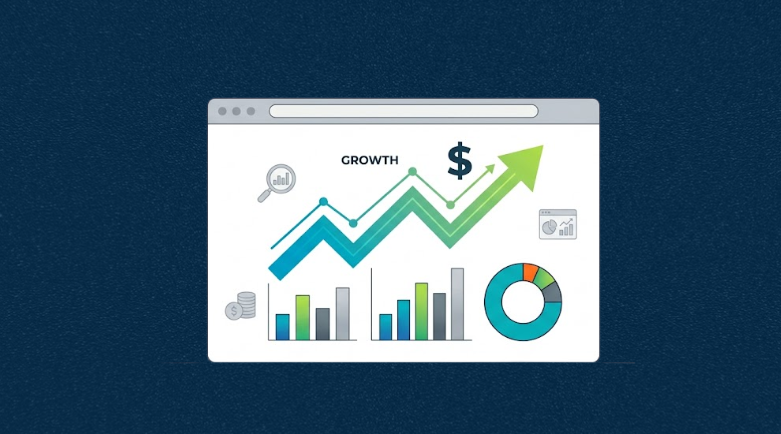
This is where lead generation stops being an expense and becomes an investment.
When you track cost per lead and cost per customer, you gain something powerful: the ability to scale with confidence. If you know it costs $40 to acquire a lead and 1 in 5 leads becomes a $1,000 customer, you can calculate exactly how much you can afford to spend to grow.
Consider a small local service business that was getting steady traffic but few bookings. By adding a simple retargeting campaign aimed at people who had visited the site but hadn't converted, and following up with an automated email sequence, they were able to double their conversions without increasing their overall ad budget. They didn't need more traffic. They needed to capture and nurture the warm leads they were already paying for.
That's the difference between spending and investing in digital marketing.
The Bottom Line
Digital marketing without lead generation is just noise. The sooner you build a system that captures and converts, the sooner your campaigns start paying for themselves, and the sooner you stop watching your budget disappear into clicks that go nowhere.
Ready to stop wasting clicks? Let's design a lead generation strategy that turns your digital marketing into real revenue.
